When a Motorcycle Crash Puts Everything at Risk — What You Need to Know First
A Denver motorcycle accident lawyer can be the difference between losing everything to medical debt and insurance tactics, or having a real path forward after a serious crash.
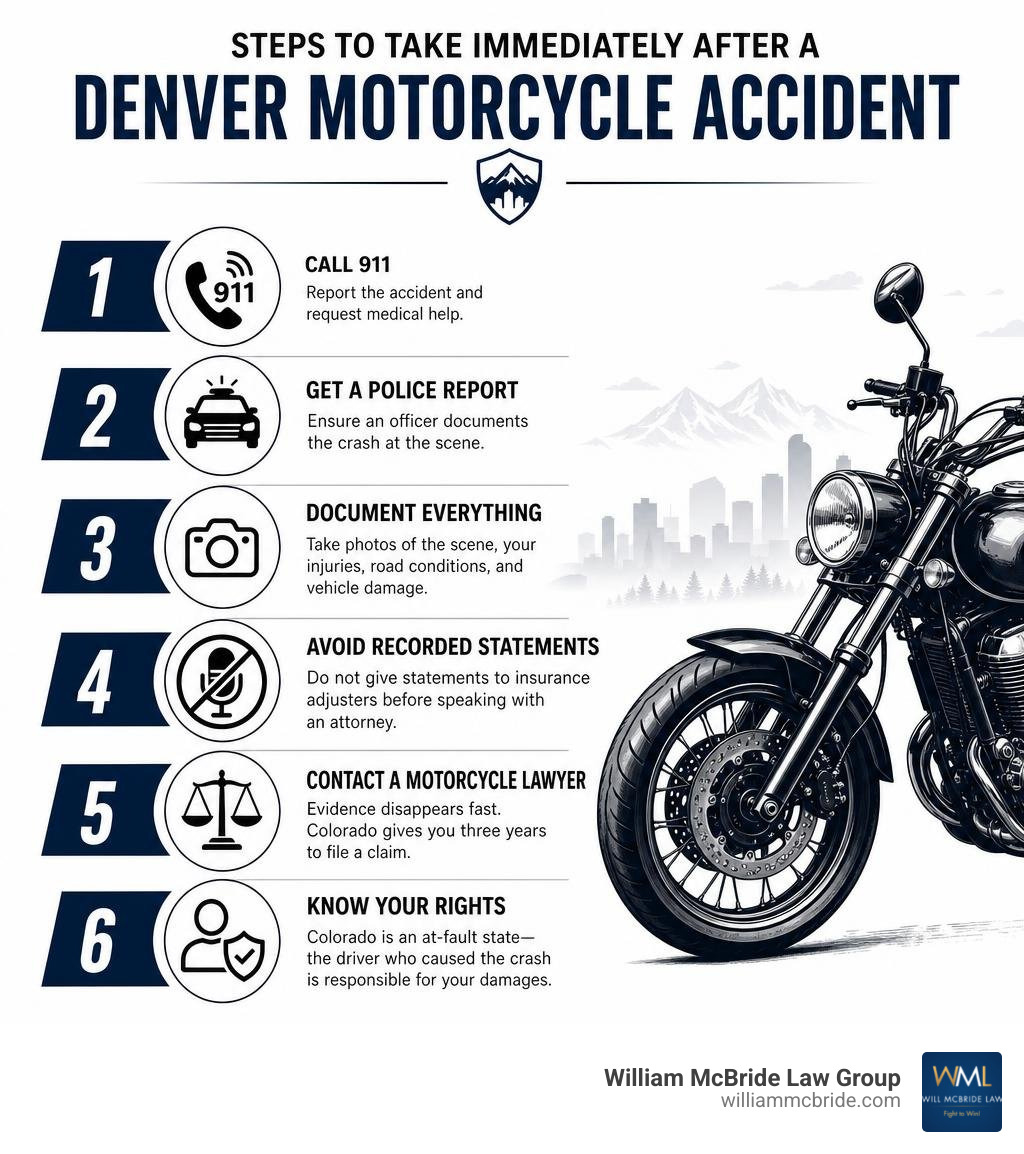
If you were just hurt in a motorcycle accident in Denver, here is what matters most right now:
Quick answers for injured riders:
- Get medical care immediately — even if injuries feel minor
- Call 911 and get a police report filed at the scene
- Document everything — photos of the crash, your injuries, road conditions, and vehicle damage
- Do not give recorded statements to insurance adjusters before speaking with an attorney
- Contact a motorcycle accident lawyer — Colorado’s statute of limitations gives you three years to file, but evidence disappears fast
- Know your rights — Colorado is an at-fault state, meaning the driver who caused the crash is responsible for your damages
Motorcycle crashes in Denver are not just dangerous — they are financially devastating. In 2024, 165 motorcyclists were killed on Colorado roads, the highest number ever recorded. Motorcycles make up just 3% of registered vehicles in the state, yet account for nearly 24% of all traffic fatalities.
Behind every one of those numbers is a real person. A working adult. Someone with bills, a family, and a life that got turned upside down in an instant.
The physical injuries alone — traumatic brain injuries, spinal damage, road rash, broken bones — can mean months of treatment and lost income. Then come the insurance companies, often quick to blame the rider and slow to pay what is fair.
That is the situation Attorney Will McBride understands deeply. The firm serves injured riders across Denver and Colorado, in both English and Spanish — se habla español — helping ordinary people protect what they have worked hard to build.
Understanding the Financial and Physical Toll of Denver Motorcycle Crashes
A motorcycle crash is rarely a minor event. Because riders lack the physical protection of an enclosed passenger cabin, even a low-speed collision can result in life-altering physical trauma. When these crashes occur, they often trigger a chain reaction of physical pain and overwhelming financial stress.
Statewide statistics paint a sobering picture of the risks riders face on Colorado roads. Motorcyclists are 22 times more likely to die in a crash than occupants of passenger vehicles. In Denver specifically, approximately 20% of all fatal motor vehicle crashes involve motorcycles. Intersections are particularly hazardous zones, accounting for roughly 35% of all motorcycle accident fatalities across the state.
When a rider is struck, the physical consequences are often severe. Common injuries include:
- Traumatic Brain Injuries (TBIs): Concussions and severe brain trauma can occur even when wearing a helmet, though unhelmeted riders face a significantly higher risk.
- Spinal Cord Damage: These injuries can lead to temporary or permanent paralysis, fundamentally changing a person’s ability to work and care for their family.
- Severe Road Rash: Far more than a simple scrape, severe road rash can cause deep tissue damage, permanent scarring, and serious infections requiring skin grafts.
- Fractures and Orthopedic Trauma: Broken limbs, shattered joints, and crushed bones often require multiple surgeries and extensive physical therapy.
The financial consequences of these injuries are split into two main categories: economic damages and non-economic damages. Economic damages cover tangible financial losses, such as emergency room fees, surgical bills, ongoing physical therapy, and lost wages from missed work. If a rider can no longer return to their previous job, economic damages also account for their reduced earning capacity. Non-economic damages address the intangible human costs of a crash, including physical pain, mental suffering, emotional distress, and loss of enjoyment of life.
When a collision involves other types of vehicles, the legal paths can vary. Victims of standard passenger vehicle collisions can learn more about their options through Auto Accidents resources. For those trying to understand the specific role of legal representation after a collision, reading about Why You May Need a Car Accident Lawyer in Denver Colorado provides helpful context. Tragically, many motorcycle crashes result in fatal injuries. In these devastating situations, grieving families may need to explore a Wrongful Death claim to seek accountability and protect their family’s financial future.
Common Causes and Severe Injuries on Colorado Roads
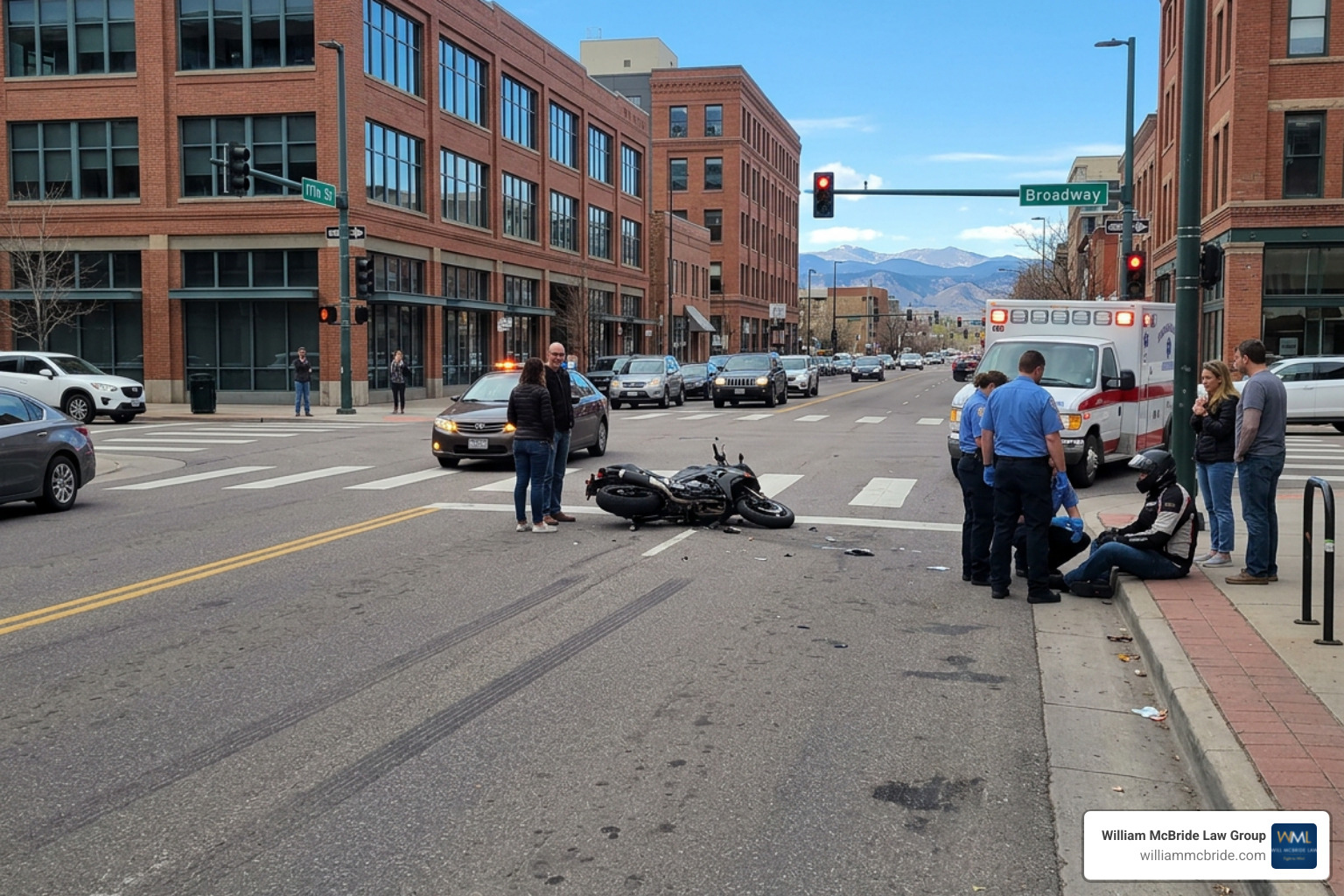
Motorcycle accidents on Colorado roads are rarely caused by the rider. More often, they are the result of passenger vehicle drivers failing to share the road safely. Distracted driving is a primary contributor, with research indicating that approximately 43% of motorcycle crashes involve attention failure, distraction, or stress on the part of the passenger vehicle driver.
Left-turn collisions are another major hazard. These occur when a driver turns left at an intersection directly into the path of an oncoming motorcycle. Because motorcycles have a smaller profile, drivers frequently claim they “did not see” the rider. In fact, roughly 60% of multi-vehicle crashes involve another driver’s failure to avoid the collision, often because they failed to yield the right-of-way.
The physical impact of these collisions is severe. Riders often suffer spinal cord damage, compound fractures, and internal organ damage. Unlike occupants of cars, motorcyclists have no airbags, seatbelts, or crumple zones to absorb the force of the impact. The sudden deceleration or ejection from the bike means the rider’s body absorbs the full force of the collision or the hard asphalt.
Why You Need a Denver Motorcycle Accident Lawyer to Protect Your Assets
Without a dedicated legal advocate, an injured rider is at a severe disadvantage. Insurance companies are businesses focused on protecting their bottom lines. They often employ tactics designed to reduce payouts, such as offering quick, lowball settlements before the full extent of the rider’s medical needs is known. Accepting one of these early offers can leave a victim with no way to pay for future medical care once the settlement money runs out.
Furthermore, insurance adjusters often harbor a subtle bias against motorcyclists, stereotyping them as reckless or inherently risky drivers. A Denver motorcycle accident lawyer works to dismantle these unfair assumptions by presenting clear, factual evidence.
By handling the complex legal paperwork, investigating the crash, and negotiating directly with insurance companies, a lawyer helps shield the rider’s personal assets from being wiped out by medical debt. To learn more about how a local attorney advocates for riders, you can review the services of a Motorcycle Accident Lawyer in Denver or read about bilingual representation options at Abogado de Accidentes de Motocicleta en Denver.
Navigating Colorado Motorcycle Laws and the Modified Comparative Negligence Rule
To protect your rights and your claim, it is essential to understand how Colorado Revised Statutes govern motorcycle operation and liability. Colorado operates under a fault-based insurance system, which means the person who caused the crash is legally responsible for the resulting damages. However, recovering those damages depends heavily on how Colorado’s comparative fault rules are applied to your case. Riders who want to review the source of Colorado law can visit the official Colorado Revised Statutes page maintained by the Colorado General Assembly.
| Colorado Motorcycle Law / Rule | Legal Requirement | Impact on Liability & Insurance Claims |
|---|---|---|
| Helmet Requirement | Only mandatory for riders and passengers under 18. | Adults 18+ cannot be ticketed for riding without a helmet, but insurers may use the lack of a helmet to argue comparative fault for head injuries. |
| Eye Protection | Mandatory for all riders and passengers (DOT-approved glasses, goggles, or face shields). | Failure to wear eye protection can be cited as negligence if debris or wind contributed to the crash. |
| Lane Filtering | Legal under Senate Bill 24-079 when traffic is completely stopped and speed is 15 mph or less. | Riding safely within these rules protects your claim; lane splitting (riding between moving cars) remains illegal and can bar recovery. |
| Comparative Negligence | Modified comparative fault with a 50% bar rule (C.R.S. 13-21-111). | If you are found 50% or more at fault, you cannot recover any damages. If you are less than 50% at fault, your compensation is reduced by your percentage of fault. |
Key Colorado Traffic Regulations for Riders
Colorado has specific traffic laws that riders must follow to remain compliant and protect their safety. First, helmet use is only legally required for operators and passengers under the age of 18. Adults aged 18 and older are legally permitted to ride without a helmet. However, eye protection is mandatory for all riders and passengers. This must be a DOT-approved device, such as a helmet visor, safety goggles, or eyeglasses with safety lenses; a standard motorcycle windshield does not satisfy this legal requirement.
Additionally, Colorado recently updated its laws regarding how motorcycles navigate slow or stopped traffic. Under Senate Bill 24-079, lane filtering became legal under very specific conditions. Riders are permitted to pass stopped vehicles on the left or right within the same lane, provided that:
- The flow of traffic is completely stopped.
- The motorcycle does not exceed 15 miles per hour while filtering.
- The road has lanes wide enough to permit safe passing.
It is important to note that lane splitting – which involves riding between lines of moving vehicles at normal road speeds – remains strictly illegal in Colorado. Riders must follow these specific guidelines to ensure they remain compliant with state traffic laws and protect their right to seek compensation if an accident occurs.
How Comparative Fault Affects Your Claim
Colorado utilizes a modified comparative negligence rule (specifically C.R.S. 13-21-111) with a 50% bar. This means an injured rider can recover compensation from the other driver as long as the rider’s own fault for the accident is less than 50%. If the rider is found to be 50% or more responsible for the collision, they are legally barred from recovering any damages from the other party.
If the rider is less than 50% at fault, their total financial recovery will be reduced by their percentage of responsibility. For example, if a jury determines that a rider’s total damages equal $100,000, but finds the rider was 20% at fault for speeding, the final compensation will be reduced by 20%, resulting in an $80,000 recovery.
Because of this rule, insurance defense lawyers often use specific tactics to shift blame onto the rider. They may point to a lack of a helmet, minor speeding, or lane-filtering maneuvers to argue that the rider was primarily at fault, attempting to push the rider’s fault percentage above the 50% threshold to avoid paying the claim entirely.
Steps to Take Immediately After a Crash to Protect Your Rights
The hours and days immediately following a motorcycle crash are critical for protecting both your physical health and your legal rights. Taking the right steps early can prevent insurance companies from undermining your claim.
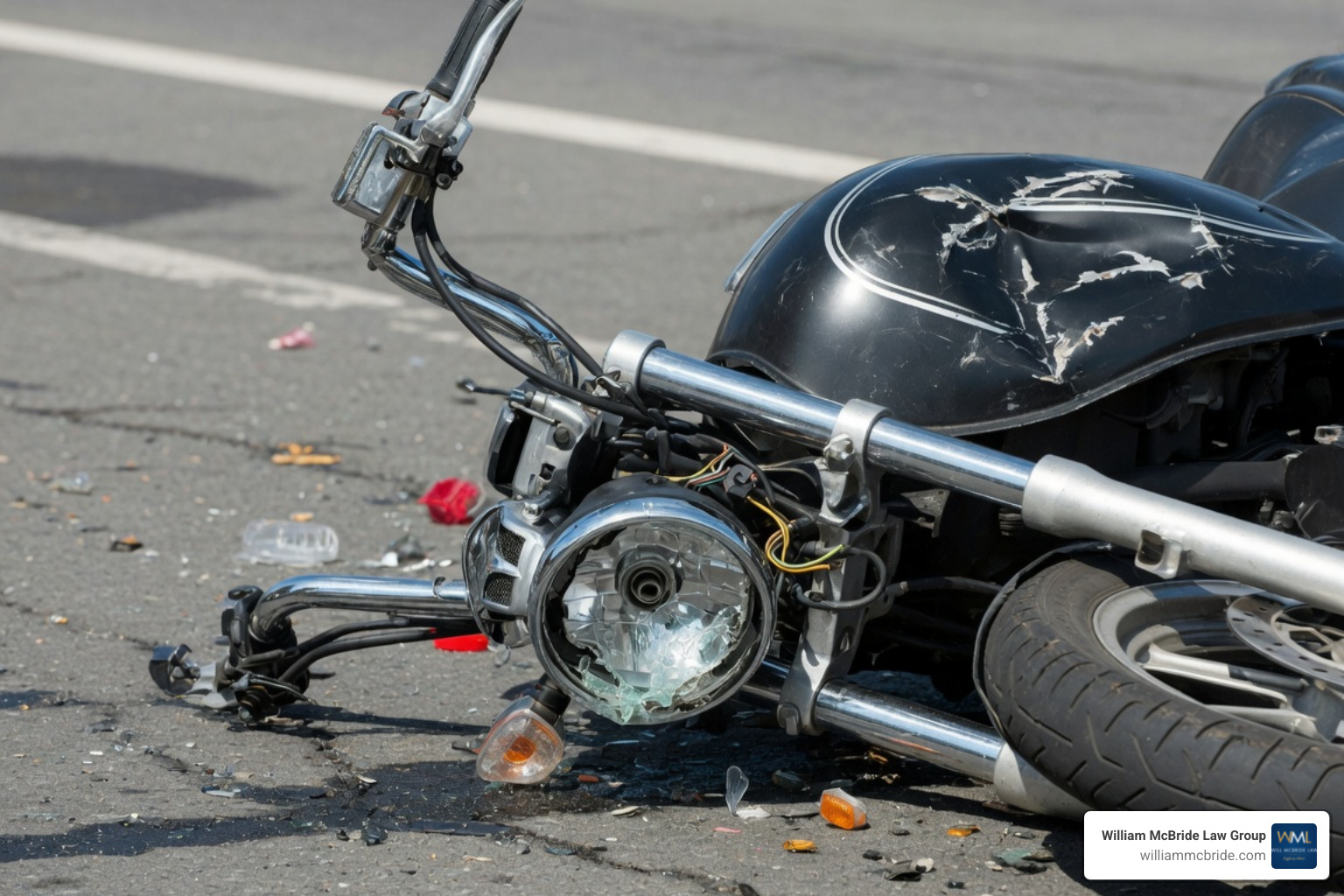
- Prioritize Safety and Call 911: Immediately move to a safe location if you are physically able to do so. Call emergency services to ensure police officers and medical personnel arrive at the scene.
- Seek a Comprehensive Medical Evaluation: Even if you feel fine or believe your injuries are minor, see a doctor immediately. Adrenaline can mask severe internal injuries, concussions, or soft tissue damage. Having a medical record created on the day of the crash establishes a direct link between the accident and your injuries.
- Report the Crash and Obtain a Police Report: Ensure the responding officer takes statements and files an official report. This report is a vital piece of evidence that contains the officer’s initial assessment of fault.
- Notify Your Insurance Company Cautiously: Report the accident to your insurer to comply with policy requirements, but stick strictly to the basic facts (date, time, location, and vehicles involved). Do not speculate about fault or give a recorded statement until you have consulted an attorney.
Gathering Crucial Evidence at the Scene
If you are physically able to do so, gathering evidence at the crash scene is incredibly valuable. Because road conditions change and vehicles are quickly towed away, physical evidence can disappear within hours.
- Take Photos and Videos: Capture wide angles of the entire scene, including skid marks, road hazards, traffic signs, and weather conditions. Take close-up photos of the damage to your motorcycle and the other vehicles involved, as well as your physical injuries.
- Collect Witness Information: Get the names, phone numbers, and email addresses of anyone who saw the crash occur. Independent witness statements are powerful tools for proving liability.
- Preserve Your Riding Gear: Do not throw away your damaged helmet, torn jacket, or scuffed boots. Keep them exactly as they are after the crash, as they serve as physical proof of the force of the impact.
- Check for Camera Footage: Look around for nearby business surveillance cameras, traffic cameras, or dash-cams on other vehicles that may have recorded the collision.
How a Denver Motorcycle Accident Lawyer Proves Negligence
To secure a fair recovery, your legal team must establish that the other driver was negligent. This requires proving four essential legal elements:
- Duty of Care: The other driver owed a legal duty to operate their vehicle safely and follow traffic laws.
- Breach of Duty: The driver violated that duty (e.g., by texting while driving, speeding, or failing to yield).
- Causation: The driver’s breach of duty directly caused the collision.
- Damages: The rider suffered actual physical injuries and financial losses as a result of the crash.
Frequently Asked Questions About Denver Motorcycle Accident Claims
How long do I have to file a motorcycle accident lawsuit in Colorado?
Under Colorado Revised Statutes (C.R.S. 13-80-101), the statute of limitations for personal injury claims arising from a motor vehicle collision — including motorcycle accidents — is generally three years from the date of the crash.
However, if the accident resulted in a tragic loss of life, a wrongful death lawsuit must typically be filed within two years of the date of death. Additionally, if the accident involved a government vehicle or roadway hazard maintained by a public entity, a formal Notice of Claim must be filed within 180 days of the accident to preserve your right to sue. Because these deadlines are strict, contacting an attorney early is critical to avoid losing your right to seek compensation.
Can I still recover damages if I was not wearing a helmet?
Yes. Colorado law does not require riders aged 18 and older to wear a helmet. Choosing not to wear one does not prevent you from filing a personal injury claim or seeking compensation for your injuries.
However, the insurance company may attempt to use a “helmet defense” to reduce your payout. If you sustained a head or neck injury, the defense may argue that your injuries would have been less severe had you been wearing a helmet, attempting to assign you a percentage of comparative fault. This is why having skilled legal representation is essential. Notably, in 2024, approximately 44% of the motorcyclists killed on Colorado roads were not wearing helmets at the time of the crash, highlighting the physical protection helmets provide, even though they are not legally mandated for adults.
What is the difference between lane splitting and lane filtering in Colorado?
Lane splitting and lane filtering are two distinct riding maneuvers under Colorado law:
- Lane Splitting: This involves riding a motorcycle between rows of moving or slow-moving vehicles at normal road speeds. Lane splitting is strictly illegal in Colorado.
- Lane Filtering: This is the practice of passing between vehicles that are completely stopped, such as at a red light. Under Senate Bill 24-079, lane filtering is legal in Colorado, provided the motorcycle is traveling at 15 mph or less and traffic is fully stopped.
Riders who filter safely within these guidelines are acting legally, whereas lane splitting can be cited as negligence and heavily impact your comparative fault percentage in an accident claim.
Secure Your Recovery with a Denver Motorcycle Accident Lawyer
A serious motorcycle accident can disrupt your life, leaving you to face physical pain, medical bills, and intense financial pressure. Protecting your assets and securing a path to recovery requires preparation, strong evidence, and a legal team prepared to advocate for you.
Attorney Will McBride and the William McBride Law Group approach every personal injury case with a competitive, disciplined, and trial-ready approach. The firm believes that a fair settlement is often the best path forward, but that fairness from insurance companies only comes when they know your legal team is fully prepared to take the case to court if necessary.
The firm serves working families and ordinary people across Colorado, providing accessible representation in both English and Spanish (se habla español). To learn more about how Attorney Will McBride can help you protect your rights and navigate your recovery, visit the section on Motorcycle Injuries or Contact Us today for a confidential case review.
Disclaimer: The information provided in this article is for general educational purposes only and does not constitute formal legal advice. Any dramatizations are for illustrative purposes only. Case outcomes depend entirely on the unique facts and circumstances of each individual situation.