
What to Know Before Hiring a Colorado Car Accident Attorney
If you are searching for a Colorado car accident attorney, here is a quick summary of what matters most:
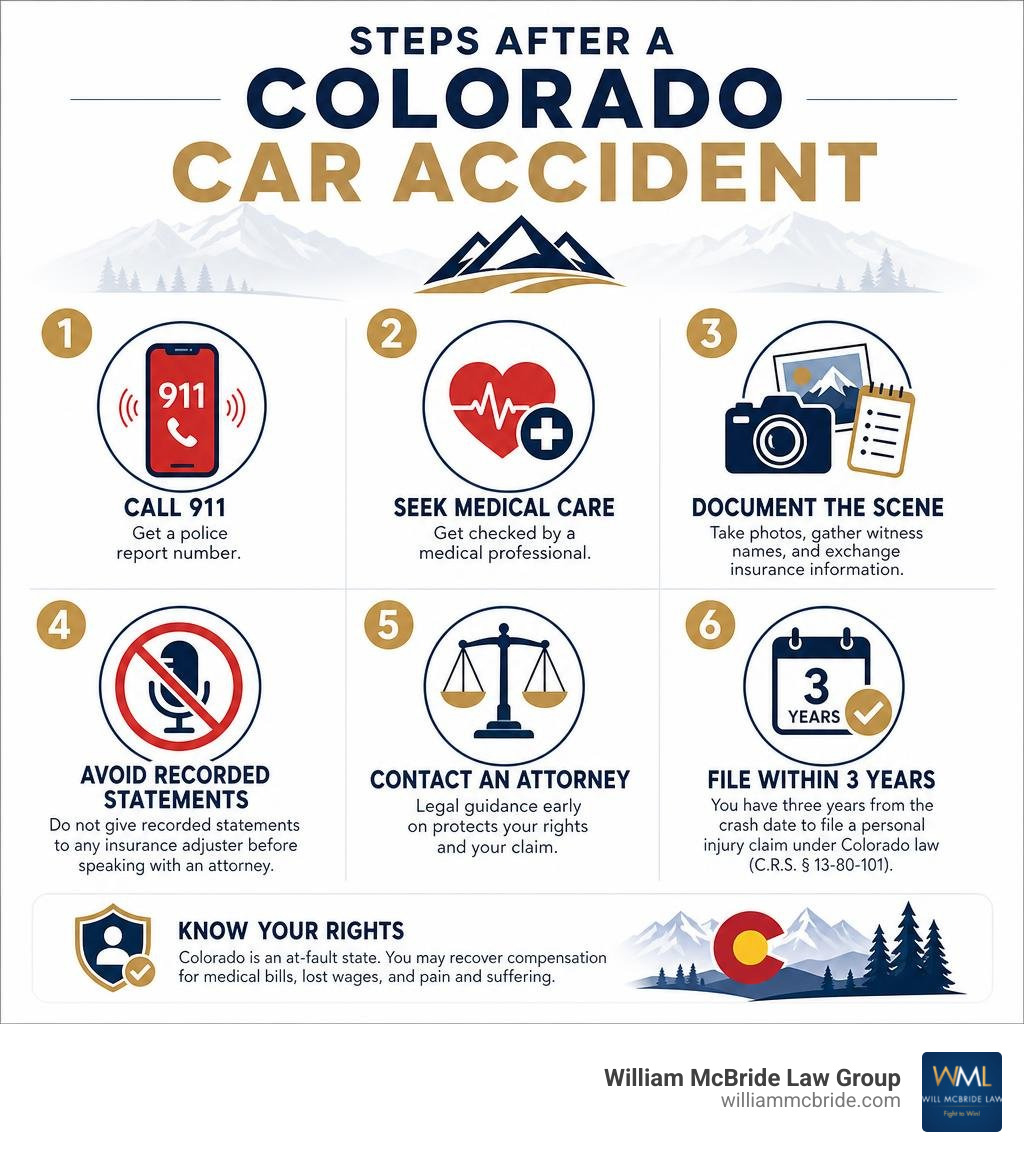
Quick Answer: Steps After a Colorado Car Accident
- Call 911 and get a police report number
- Seek medical attention immediately, even if you feel okay
- Document the scene with photos, witness names, and insurance information
- Avoid giving recorded statements to any insurance adjuster before speaking with an attorney
- Contact a car accident attorney — you have three years from the crash date to file a personal injury claim under Colorado law (C.R.S. § 13-80-101)
- Know your rights — Colorado is an at-fault state, and you may recover compensation for medical bills, lost wages, and pain and suffering
Every day on Colorado’s roads — from I-25 through Denver to mountain highways along US-285 — crashes happen without warning. One moment everything is normal. The next, someone is dealing with injuries, a damaged vehicle, missed work, and a stack of medical bills that keeps growing.
That kind of sudden disruption is overwhelming. And it gets more complicated fast.
Insurance adjusters may call within hours. Medical bills arrive before the full picture of your injuries is even clear. Questions pile up: Who pays for this? Am I entitled to compensation? What if I was partly at fault?
These are fair questions, and they deserve honest answers.
Colorado recorded 294 traffic fatalities in just the first half of 2024, with impaired driving, speeding, and distracted driving among the leading causes. Denver County alone saw nearly 85,000 crashes between 2020 and mid-2025. Behind every one of those numbers is a real person — often a working adult trying to get back on their feet while the legal and insurance process moves forward without them.
Attorney Will McBride, known in the community as Abogado William, understands that reality. The William McBride Law Group works with injured people across Colorado’s Front Range — in English and in Spanish — helping them understand their options and protect their claims from the start.
This guide walks through everything a crash victim needs to know: common causes and injuries, what to do immediately after an accident, how compensation works, and what to look for when choosing the right legal representation.
Colorado Car Accidents: Common Causes, Statistics, and Injuries
When a crash occurs, understanding the underlying cause is essential for establishing liability. On Colorado roads, several negligent behaviors consistently contribute to collisions.
According to Colorado Department of Transportation traffic safety resources, a significant portion of crashes involve preventable driver behaviors. In Colorado, approximately 15% of all motor vehicle accidents are directly attributed to distracted driving, such as texting, adjusting navigation systems, or using mobile devices.
Impaired driving remains another critical danger. Close to one-third (27%) of all traffic crashes in the state involve Drunk Drivers or individuals under the influence of drugs. Speeding, aggressive driving, and failing to yield the right-of-way also rank among the top factors that turn daily commutes into life-altering events.
The location of a collision also plays a major role in how accidents happen. Approximately 50% of all motor vehicle accidents occur within or near intersections. These areas require drivers to make split-second decisions, and a single driver running a red light or misjudging a left turn can cause devastating side-impact or head-on collisions.
The sheer volume of accidents in metropolitan areas highlights the scale of the issue. For instance, Denver County recorded nearly 85,000 crashes from 2020 to mid-2025, a figure that included 349 fatal wrecks and over 3,000 serious-injury crashes. On average, Denver experiences 478 serious injuries and 49 fatalities annually due to motor vehicle accidents. In 2023 alone, Denver County experienced over 15,000 car accidents, with 720 of those collisions resulting in a fatality.
The physical toll of these incidents is often severe. Victims can suffer a wide range of Auto Related Injuries, including:
- Whiplash and Soft Tissue Damage: Common in rear-end collisions, these injuries affect the tendons, muscles, and ligaments in the neck and upper back.
- Traumatic Brain Injuries (TBIs): Ranging from mild concussions to severe cognitive impairments, brain injuries can occur when the head strikes an object or experiences sudden, violent movement.
- Spinal Cord Injuries: Damage to the spine can result in chronic pain, herniated discs, or permanent paralysis.
- Fractures and Broken Bones: The force of an impact frequently causes broken collarbones, arms, legs, or ribs.
- Internal Organ Damage: Blunt force trauma can lead to internal bleeding or damage to vital organs, requiring immediate emergency surgery.
Recognizing these injuries and obtaining immediate medical diagnostic testing is the first and most critical step toward physical and legal recovery.
What to Do After a Crash: Immediate Steps, Evidence, and Fault
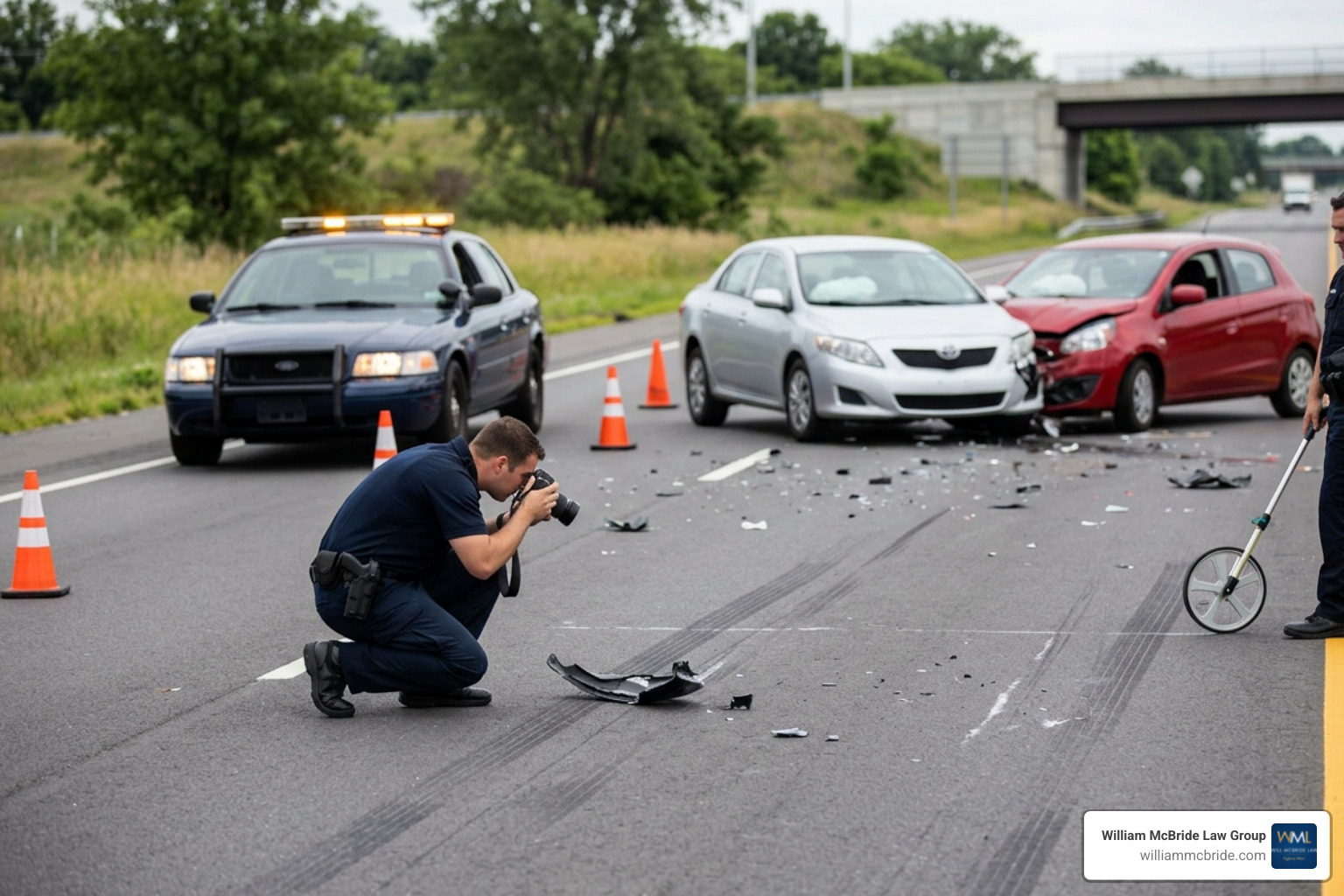
The hours and days immediately following a car crash are often chaotic, but the actions a victim takes during this period can profoundly affect their ability to recover compensation. Knowing what to do helps preserve crucial evidence and protects your legal rights.
1. Prioritize Safety and Call 911
Immediately move to a safe area if possible, check for injuries, and call 911. Requesting law enforcement is critical because responding officers will document the scene and draft an official police report. This report is a foundational piece of evidence in any future claim, as it contains officer observations, diagrammed vehicle positions, and sometimes initial citations for traffic violations.
2. Document the Scene and Gather Evidence
Physical evidence can disappear quickly as roads are cleared and weather conditions change. If it is safe to do so, use a smartphone to photograph:
- Damage to all vehicles involved (including close-ups and wide angles)
- The positions of the vehicles relative to the roadway and intersections
- Skid marks, debris fields, and road hazards
- Traffic signals, stop signs, and construction zones
- Visible physical injuries
Additionally, obtain contact information from any eyewitnesses who stopped to assist. Their unbiased statements can be invaluable if the other driver’s insurance company disputes how the crash occurred. If nearby businesses or public transit vehicles have cameras, or if any vehicle involved utilized dashcam footage, those recordings should be identified and requested as soon as possible.
3. Seek Medical Attention Immediately
Even if an individual feels fine or believes their injuries are minor, they should be evaluated by a healthcare professional within 24 hours. Adrenaline can mask pain, and serious conditions like internal bleeding or concussions may not show symptoms immediately. Seeking prompt medical care ensures proper treatment and creates an official medical record linking the physical injuries directly to the accident.
4. Understand Colorado’s Fault and Comparative Negligence Laws
When seeking compensation, it is vital to understand how Colorado law determines responsibility. Colorado operates under a traditional “at-fault” insurance system, meaning the driver who caused the crash is responsible for the resulting damages.
However, many cases involve shared responsibility. Under Colorado’s modified comparative negligence statute (C.R.S. § 13-21-111), an injured party can still recover compensation as long as their share of the fault is less than 50%. This is known as the 50% bar rule.
If a victim is found to be partially at fault, their total compensation will be reduced by their percentage of responsibility. For example, if a jury awards $100,000 in damages but finds the plaintiff 20% responsible for the accident, the final recovery would be reduced to $80,000. If the plaintiff is found to be 50% or more at fault, they are barred from recovering any compensation.
Because insurance companies often try to shift blame to minimize their financial exposure, having a clear record of evidence is essential. This is particularly true in complex scenarios, such as a Multiple Car Pile Up, where multiple drivers may share degrees of liability. To navigate these complexities, understanding Why You May Need a Car Accident Lawyer in Denver Colorado becomes a valuable asset for protecting your interests.
Recovering Compensation: Insurance Tactics, Damages, and Deadlines
Pursuing a claim after a car accident involves seeking financial recovery for the losses you have sustained. In Colorado, compensation is categorized into economic and non-economic damages, and in rare cases of extreme recklessness, punitive damages.
| Damage Category | Type of Loss Covered | Examples of Recoverable Expenses |
|---|---|---|
| Economic Damages | Verifiable financial losses with direct monetary values | Medical bills, future rehabilitative care, lost wages, loss of earning capacity, property damage |
| Non-Economic Damages | Subjective, non-monetary losses affecting quality of life | Pain and suffering, emotional distress, loss of enjoyment of life, physical impairment, disfigurement |
Navigating Insurance Company Tactics
While drivers pay premiums expecting protection, insurance companies may operate as businesses focused on protecting their bottom lines. Adjusters often contact injured victims within the first 72 hours of an accident. They may appear friendly and sympathetic, but their goal is often to gather information that can be used to devalue or deny a claim.
A common tactic is asking for a recorded statement. Adjusters may ask leading questions designed to get the victim to admit partial fault or state that their injuries are not severe. It is highly recommended to decline giving a recorded statement to the other driver’s insurance provider until you have consulted with a legal representative.
Another tactic is offering a quick, lowball settlement before the victim fully understands the scope of their medical needs. Accepting an early settlement requires signing a release form, which permanently waives the right to seek additional compensation if injuries worsen later.
Critical Deadlines: The Statute of Limitations
In Colorado, you do not have unlimited time to take legal action. Under C.R.S. § 13-80-101, the statute of limitations for filing a personal injury lawsuit arising from a motor vehicle accident is generally three years from the date of the crash.
If you are filing an Auto Accident Denver claim, missing this three-year window will almost certainly result in the court dismissing your case, leaving you with no legal recourse to recover compensation.
It is important to note that different deadlines apply in other circumstances. For example, if a crash tragically results in a fatality, the family must follow specific guidelines for filing a Wrongful Death Auto lawsuit, which generally carries a two-year statute of limitations from the date of passing. If a government vehicle or entity is involved in the accident, the timeline to file a formal notice of claim is significantly shorter, often requiring action within 182 days.
How to Choose a Colorado Car Accident Attorney
Selecting legal representation is a personal decision that can significantly impact the trajectory of your recovery. A study by the Insurance Research Council found that personal injury victims represented by legal counsel receive, on average, 3.5 times more compensation than those who handle their claims independently.
When searching for a Colorado car accident attorney, it is helpful to look for specific traits that align with your needs. Finding a legal team that understands standard practices and has a strong presence in your community can make a significant difference in how your claim is handled.
When to Hire a Colorado Car Accident Attorney
While minor fender-benders with no injuries might be settled directly with insurers, legal representation becomes crucial in several situations:
- Disputed Liability: When the other driver or their insurer denies responsibility or claims you caused the crash.
- Severe or Permanent Injuries: When medical treatment is extensive, ongoing, or expected to cause long-term disability.
- Involvement of Multiple Parties: When the crash involves commercial trucks, rideshare vehicles, or multiple cars.
- Uninsured or Underinsured Motorists: When the at-fault driver lacks sufficient coverage, requiring you to navigate claims through your own policy.
If you find yourself facing any of these challenges, exploring your options for Auto Accidents legal support can help clarify your next steps.
Key Qualities of a Dedicated Colorado Car Accident Attorney
A dedicated attorney should offer more than just legal knowledge. They should provide a supportive, accessible environment for their clients. Key qualities to look for include:
- Bilingual Accessibility: Legal processes are complex, and discussing them in your native language is essential for clear communication. A firm that provides services in both English and Spanish (Se habla español) ensures that no detail is lost in translation. For Spanish-speaking families, finding a trusted Abogado de Accidentes Automovilisticos en Denver provides peace of mind during a stressful time.
- Community-Rooted Advocacy: An attorney who understands the local community, working families, and the unique challenges faced by everyday people will approach your case with genuine compassion and respect.
- Trial Readiness: Many cases settle out of court, but the strongest settlements often come when the insurance company knows your attorney is fully prepared to take the case to trial if a fair agreement cannot be reached.
Conclusion
A car accident can disrupt your life, leaving you to deal with physical pain, emotional stress, and sudden financial burdens. Navigating the recovery process should not involve guessing about your legal rights or fighting insurance companies alone.
Attorney Will McBride and the legal team at William McBride Law Group believe that every injured person deserves respect, clear communication, and dedicated preparation. Bringing an aggressive trial-ready approach, the firm has helped thousands of clients recover hundreds of millions of dollars in Personal Injury and accident cases. Every case is unique, and while prior results do not predict future outcomes, the firm treats every client’s story with the serious attention it deserves.
If you or a loved one has been injured on Colorado’s roads, you do not have to carry the burden alone. The William McBride Law Group serves communities across the Front Range, providing legal support in both English and Spanish.
To discuss your situation, learn about your options, and take a steady step forward, contact the Contact Denver Office today to schedule a free, no-obligation consultation. You can also explore more about the firm’s approach to Auto Accidents to see how they can stand by your side.
Disclaimer: The information provided in this article is for general educational purposes only and does not constitute formal legal advice. Any dramatizations are for illustrative purposes only. Case outcomes depend entirely on the unique facts and circumstances of each individual matter.