
When Life Gets Turned Upside Down: What to Know About Denver Colorado Personal Injury Lawyers
If you’ve been seriously hurt in an accident, finding Denver Colorado personal injury lawyers who will take your case seriously is one of the most important decisions you’ll face. Medical bills pile up. Paychecks stop coming. And the other side’s insurance company is already working to protect itself — not you.
Here is a quick overview of what injured people in Denver should know:
Key Facts About Denver Personal Injury Claims
- Statute of limitations: 3 years from the date of injury for most claims; 2 years for wrongful death; 182 days to notify a government entity
- Colorado fault rule: You can recover compensation as long as you are less than 50% at fault (modified comparative negligence)
- Common case types: Car accidents, truck crashes, motorcycle injuries, slip and falls, dog bites, wrongful death
- Insurance offers: Early offers from insurers may not reflect the full value of a claim
- Consultations: Many Denver personal injury law firms, including Will McBride Law Group, offer consultations for injured people who want to understand their options
The road after an injury is hard. But understanding your rights — and having the right legal team — can make a real difference in what happens next.
Attorney Will McBride, known in the community as Abogado William, works with injured people and families across Denver who are trying to make sense of what happened and figure out how to move forward. The firm serves clients in both English and Spanish. Se habla español.
This guide walks through everything you need to know — from determining whether you have a valid claim under Colorado law, to understanding how the legal process works, to choosing a lawyer who will actually fight for you.
Determining If You Have a Valid Case Under Colorado Law
Before diving into the legal system, the first question to answer is whether you have a valid claim. In Colorado, personal injury law revolves around the concept of legal fault. If someone else’s carelessness or negligent behavior caused your injury, you may have a case.
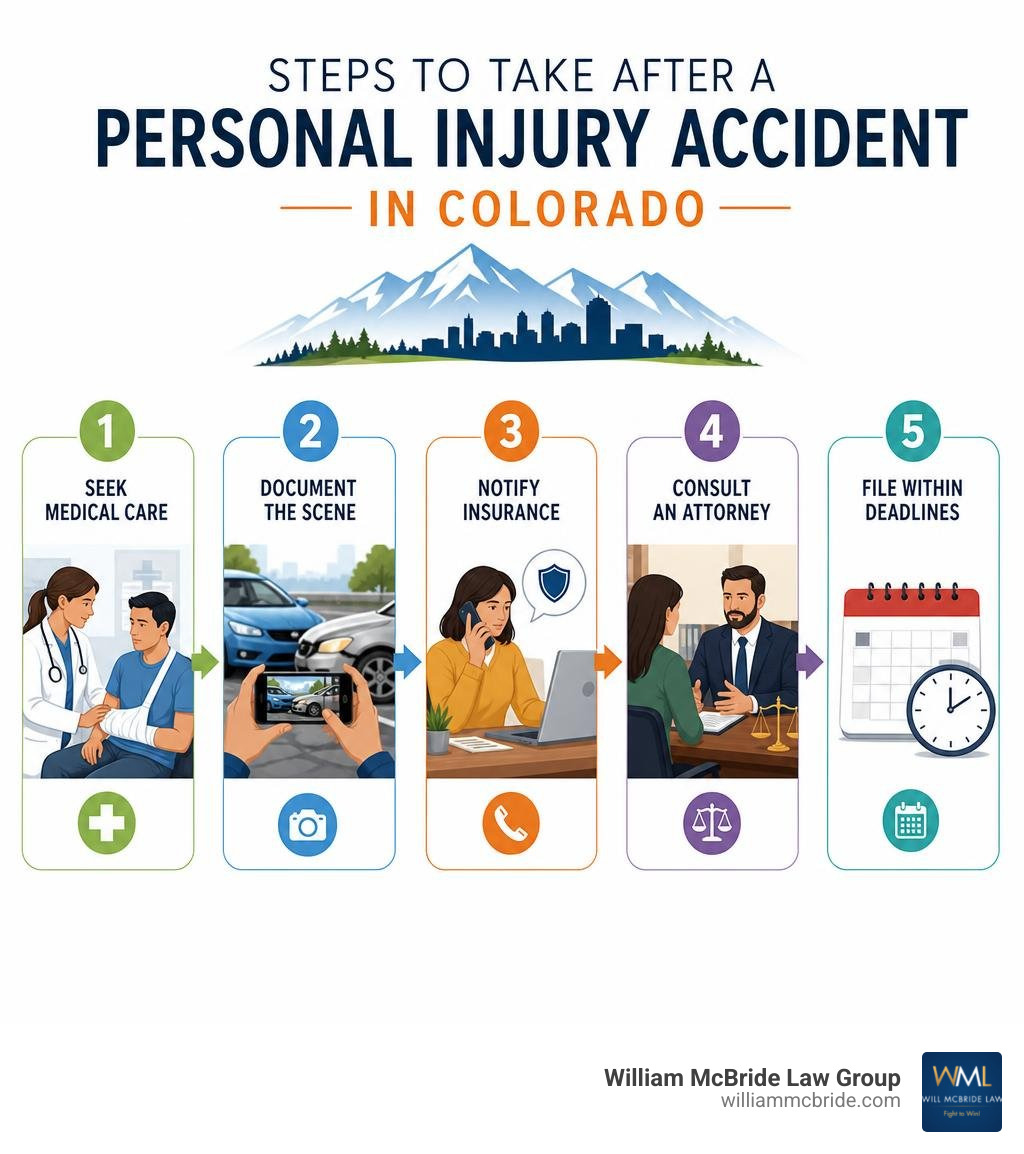
Determining liability requires a careful look at what happened leading up to, during, and immediately after the incident. This is why preserving the accident scene—through photos, witness statements, and official reports—is so critical.
Colorado uses a system called modified comparative negligence under Colorado Revised Statutes (C.R.S.) 13-21-111. This law allows you to recover compensation even if you were partially to blame for the accident, provided your share of the responsibility is less than 50 percent. If you are found to be 50 percent or more at fault, you cannot recover any damages under Colorado law. An attorney can perform a thorough liability evaluation to help you understand how this rule applies to your specific situation.
Key Elements of Negligence
To build a successful claim, your legal team must establish four fundamental elements of negligence. If any of these elements are missing, the insurance company will likely deny your claim:
- Duty of Care: The other party had a legal obligation to act reasonably and avoid causing harm. For example, drivers have a duty to follow traffic laws, and property owners have a duty to keep their premises safe.
- Breach of Duty: The party failed to meet that standard of care. This could involve speeding, driving under the influence, or failing to clean up a spill on a grocery store floor.
- Causation: The breach of duty directly caused your injuries. It is not enough that someone was careless; their carelessness must be the direct reason you were hurt.
- Measurable Damages: You suffered actual, documented losses as a result of the injury, such as medical bills, physical therapy costs, lost income, or severe physical pain.
Gathering physical proof is key to proving these elements. When an accident occurs, having a plan for collecting evidence can protect your rights from day one.
Essential Evidence to Gather at an Accident Scene:
- Photographs of the overall scene, vehicle damage, and any visible injuries
- Contact information for all drivers, passengers, and eyewitnesses
- A copy of the police report or the responding officer’s badge number
- Medical records and discharge paperwork from your initial evaluation
- Documentation of any missed work or lost wages
For additional resources on Colorado statutes and legal guidelines, you can review the Best Personal Injury Lawyers in Colorado – Justia directory and information database.
Colorado Statute of Limitations and Deadlines
In Colorado, you do not have unlimited time to take legal action. The state enforces strict deadlines, known as the statute of limitations, for filing personal injury lawsuits. If you miss these deadlines, the courts will likely refuse to hear your case, and you will lose your right to seek compensation.
The specific deadline depends on the type of accident that occurred:
- Motor Vehicle Accidents: Colorado law provides a three-year limit from the date of the crash to file a lawsuit for injuries arising from a car, truck, or motorcycle accident.
- General Personal Injury and Wrongful Death: For most other personal injury claims, such as slip and falls, dog bites, or wrongful death claims, there is a strict two-year limit.
- Claims Against Government Entities: If your injury involved a government vehicle, a public transit bus, or took place on government property, you must file a formal notice of claim within 180 days of the incident. This is a non-negotiable requirement before you can pursue any legal action.
Because these timelines can be complex and evidence can disappear quickly, consulting with an attorney early on helps ensure all necessary notices are filed on time.
Common Types of Accidents and Injuries in the Mile High City
Denver is a beautiful, fast-growing city, but its busy streets, highway corridors, and active outdoor lifestyle also lead to a high volume of accidents. According to local traffic statistics, Denver experiences thousands of motor vehicle crashes annually, resulting in thousands of injuries and numerous fatalities.
Certain areas in the city are notorious hotspots for collisions. Highly traveled corridors like Colfax Avenue, Federal Boulevard, Interstate 70, and Interstate 25 see daily accidents due to heavy traffic, construction, and distracted driving.
Roadway Accidents and Catastrophic Injuries
Roadway accidents are among the most common sources of severe injuries in Colorado. Whether you are commuting on I-25 or driving through downtown Denver, a sudden crash can change your life in an instant.
- Car Crashes: Distracted driving, speeding, and winter weather frequently lead to multi-vehicle collisions. Understanding the local legal landscape is essential, which is why reviewing resources like Why You May Need a Car Accident Lawyer in Denver Colorado can help clarify your options.
- Commercial Trucks: Accidents involving massive semi-trucks and delivery vehicles often result in devastating harm due to the sheer size and weight of these commercial vehicles. These claims involve complex federal regulations, making it highly beneficial to speak with a dedicated Truck Accident Lawyer in Denver.
- Motorcycle Safety: Motorcyclists have very little protection in a crash. Negligent drivers who fail to check their blind spots frequently cause catastrophic collisions, leading to life-altering injuries for riders.
These high-impact collisions often result in catastrophic, long-term harm. Traumatic brain injuries (TBIs) and severe spinal cord damage can require lifetime medical care, specialized therapy, and home modifications. If you or a loved one is dealing with the cognitive or physical aftermath of a head injury, exploring Why You May Need a Traumatic Brain Lawyer for Your Injury in Denver Colorado can provide valuable guidance on seeking accountability.
Navigating Your Claim with Denver Colorado Personal Injury Lawyers
When you are recovering from a physical injury, trying to handle a complex legal claim on your own can be overwhelming. Insurance companies employ teams of adjusters and lawyers whose primary goal is to minimize the amount of money they pay out. Having dedicated legal representation on your side helps level the playing field.
An experienced attorney focuses on thorough trial preparation and strategic negotiation to protect your interests. Rather than looking for a quick, low settlement that may not cover your future medical needs, a trial-ready legal team prepares every case as if it is headed to court. This comprehensive preparation sends a clear message to the insurance company that you will not accept an unfair outcome.
How Denver Colorado Personal Injury Lawyers Evaluate Your Case
Evaluating the true value of a personal injury case involves much more than simply adding up your current medical bills. A detailed evaluation looks at both your immediate losses and the long-term impact the injury will have on your life.
Your attorney will gather and analyze:
- Comprehensive medical records and treatment plans
- Expert accident reconstruction reports to establish clear fault
- Economic damages, which include past and future medical expenses, physical therapy, prescription costs, and lost earning capacity if you can no longer work in the same field
- Non-economic damages, such as physical pain and suffering, emotional distress, and loss of enjoyment of life
It is also important to understand how Colorado’s legislative limits affect your recovery. Under Colorado House Bill 24-1472, there are specific statutory damage caps on non-economic damages (such as pain and suffering), which are adjusted periodically for inflation. Economic damages, however, do not have a cap, meaning you can pursue full recovery for all actual financial losses, including lifetime care costs.
How Denver Colorado Personal Injury Lawyers Negotiate with Insurance Companies

Insurance adjusters are likely trained to protect their company’s bottom line. Shortly after an accident, they may call you with a quick settlement offer. While this may seem helpful when bills are piling up, early offers often fail to account for the full scope of your medical needs, lost income, pain, and long-term recovery. Once you sign a release and accept a settlement, your case is permanently closed, even if you discover later that you need surgery or additional treatment.
Common Insurance Tactics and How a Lawyer Protects You:
- Recorded Statements: Adjusters may ask you to give a recorded statement, hoping you will say something that can be used to shift the blame to you. Your attorney will handle all communication, keeping you from making statements that could harm your claim.
- Delaying the Process: Insurers sometimes delay claims to pressure injured victims into accepting lower settlements out of financial desperation. A lawyer keeps your case moving forward.
- Unreasonable Denials: If an insurer acts unfairly or refuses to pay a valid claim without a reasonable basis, your attorney can investigate whether you have grounds for a bad faith insurance claim.
- Litigation Readiness: When negotiations stall, a lawyer who is ready to file a lawsuit and proceed to trial can motivate the insurance company to make a much fairer settlement offer.
What to Expect: Timelines, Consultations, and Legal Fees
The legal process can feel unfamiliar and intimidating, especially when you are already dealing with physical pain and financial stress. Knowing what to expect during your legal journey can help you feel more grounded and confident.
The Initial Consultation and Case Timeline
Your legal journey often begins with an initial consultation. This is a confidential, two-way conversation where you can share the details of what happened, ask questions, and learn about your legal rights. You should bring any documents you have, such as police reports, medical records, and insurance letters, to this initial meeting.
Once you decide to move forward, your case will generally follow this timeline:
- Medical Treatment and Stabilization: Your primary focus must be on healing. Your attorney will monitor your progress until you reach Maximum Medical Improvement (MMI)—the point at which your doctor believes your condition has stabilized. This ensures all future medical needs are fully understood before any settlement demands are made.
- Investigation and Evidence Gathering: While you recover, your legal team will collect medical records, interview witnesses, analyze police reports, and consult with medical or financial experts if necessary.
- The Demand Letter and Negotiation: Your attorney will send a detailed demand letter to the insurance company, outlining the facts of the accident, the evidence of liability, and the full extent of your damages. This initiates the negotiation phase.
- Filing a Lawsuit and Discovery: If the insurance company refuses to offer a fair settlement, your attorney may file a formal lawsuit in court. This begins the “discovery” phase, where both sides exchange evidence and take depositions.
- Trial Preparation or Settlement: Many cases are resolved through mediation or settlement conferences during the litigation process. However, if a fair agreement cannot be reached, your case will proceed to trial. In Denver courts, the timeline from filing a lawsuit to reaching a trial date typically takes between 12 to 14 months.
Choosing the Right Attorney
When choosing an attorney, it is helpful to understand the differences in how law firms approach cases. Some high-volume firms may focus on settling cases as quickly as possible, while trial-ready firms prioritize personal attention and thorough preparation.
| Feature | Settlement-Focused Firms | Trial-Ready Firms (e.g., Will McBride Law Group) |
|---|---|---|
| Primary Goal | Resolve cases quickly through early settlement | Prepare every case thoroughly to pursue full value |
| Caseload | Very high volume; less individual attention | Managed caseload; high-touch personal attention |
| Insurance Perception | Insurers know these firms rarely go to court | Insurers respect their reputation of going to trial |
| Approach to Litigation | May refer complex cases to other trial lawyers | Handles the case from investigation through a jury verdict |
Frequently Asked Questions About Denver Personal Injury Claims
What is the average settlement for a Denver personal injury case?
There is no single “average” settlement amount because every personal injury claim is unique. The value of a case depends entirely on the specific facts involved, including the severity of your injuries, the cost of your medical treatment, the amount of lost income, and the clear determination of fault.
While minor injuries with straightforward medical care may settle for thousands of dollars, severe, life-altering injuries or wrongful death claims can result in multi-million dollar verdicts and settlements to cover lifetime medical expenses and lost earning capacity. Every case is different, and prior outcomes do not guarantee a specific result for your claim.
How does modified comparative negligence affect my Colorado claim?
Under Colorado’s modified comparative negligence law, your compensation will be reduced by your percentage of fault. For example, if a jury determines that your total damages are $100,000, but finds that you were 20 percent responsible for the accident (perhaps for traveling slightly over the speed limit), your recovery will be reduced by 20 percent, resulting in a final award of $80,000. However, if you are found to be 50 percent or more at fault, you will be barred from recovering any compensation at all. Insurance adjusters often try to use this rule to shift the blame to you in order to reduce their payout.
Do I have to go to court to resolve my personal injury case?
Not necessarily. In fact, between 90 and 95 percent of personal injury cases in the United States are resolved through out-of-court settlements before a trial ever begins. However, the most effective way to secure a fair settlement without going to court is to show the insurance company that you are fully prepared to do so. When a law firm prepares your case with the discipline needed for a jury trial, it gives you a much stronger position during negotiations.
Conclusion
If you or a loved one has been injured due to someone else’s negligence, you do not have to navigate the complex legal system alone. Securing the support of a trial-ready legal team can provide you with the guidance, peace of mind, and advocacy you need to focus on your recovery.
The Will McBride Law Group brings an aggressive trial approach and a long history of standing up for ordinary people. The firm is dedicated to providing compassionate, personal attention to injured individuals and working families, ensuring that every client is treated with the dignity and respect they deserve. With bilingual legal support in English and Spanish (Se habla español), the team is ready to help you understand your legal options.
To discuss your case and find out how we can assist you, please visit our Contact Denver Office page to schedule a confidential consultation. You can also learn more about protecting your rights after a crash by reading our guide on how to Protect Your Rights After an Accident.
Disclaimer: The information provided in this article is for general educational purposes only and does not constitute formal legal advice. Any dramatizations are for illustrative purposes only. Case outcomes depend entirely on the unique facts and circumstances of each individual matter.